How Teacher Recognition Reaches the Classroom
In a Class 3 government school in Nandurbar, a teacher has spent the last three weeks on a reading activity that most of her class couldn’t complete. Her students are at very different places. A few are still matching letters to sounds. Others are ready for short sentences, with everyone else somewhere in between. Applying the standard activity outlined in the curriculum only ensures that none of them can learn properly.
Trying to fix the problem, the teacher stops treating it as a single activity. She sorts the children into small groups based on their abilities. She hands the same cards to each group but asks different questions of each. The slower readers get more time and fewer words. She watches who hesitates and who gives up halfway through a word, and adjusts their level and exercise accordingly.
This approach finally gets her students to understand the activity.
Nobody claps. There is no certificate and no acknowledgement from those above her. Reviews in her school still count registers and attendance more than what happens during a lesson. For weeks, the only person who knows this method exists is her.
Why Teacher Recognition in Government Schools Matters
That is the ordinary problem with good teaching. It gets almost no feedback, and it stays where it happens. A method that helps thirty children in one room helps no one in the next room because no one outside that room ever hears about it.
A small moment at a cluster meeting changes things. Another teacher mentions that grouping children by reading level got more of her own students reading aloud. A block officer sees the same thing on a school visit.
The Class 3 teacher is asked to explain what she did. Not “she is a good teacher,” but the actual steps: how she formed the groups, and what the children’s work looked like before and after.
A teacher two villages away tries it the following week.
What Effective Teacher Recognition Looks Like
That is what effective teacher recognition looks like in practice. It emphasises the action, allowing the person doing it to shine. The teacher hears that the harder, slower way of preparing her lesson was worth it, so she keeps doing it. Other teachers get a new method they can try instead of only following the written curriculum.
Specific recognition works for a reason, and vague praise does not.
Saying “Great job” feels nice for an afternoon and tells a teacher nothing about what to repeat. Research on behaviour-specific praise found the same pattern with children.
In a reading activity, telling a child they did a good job because they “started reading the moment the activity began” teaches them what to do again, while vague affirmations like “well done” fade quickly from memory.
Teachers respond to the same clarity. Specific praise encourages specific practice.
How Teacher Recognition Supports Teacher Motivation
The Self-Determination Theory identifies three needs that drive lasting motivation: competence, autonomy, and relatedness.
A teacher feels competent when someone recognises her work as effective. She gains a sense of ownership when others take her classroom idea seriously, and she feels connected when other teachers start using it.
Most reviews currently don’t focus on any of these elements. Specific recognition helps solve this problem and motivates teachers holistically.
Administrators who give the recognition describe the same loop. Surendra C Chandrasen, a Block Resource Coordinator in Raipur, puts it plainly:
“When a teacher does something good, for themselves or for a student, we should reward them, and it should be constant. That is what makes a teacher want to innovate and keep doing good things. And when teachers do good, students learn better and want to learn more.”
How Vinoba Supports Teacher Recognition in Government Schools
Vinoba works to provide this kind of recognition.
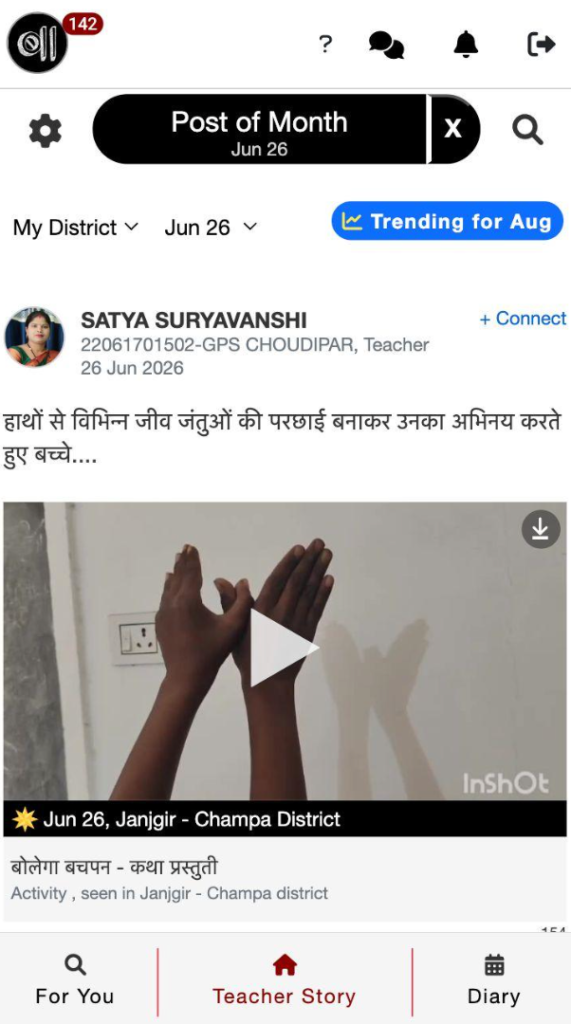
We provide a platform where teachers can post their classroom activities and student work, peers can connect and learn from them, and administrators can see what is reaching the classrooms.
Recognition needs evidence, and posts on the platform about how children feel more confident or understand a concept better provide that evidence.
Each month, the best posts from blocks and districts that showcase a new activity or a unique teaching method are recognised and awarded the Post of the Month. The district administration can also directly provide encouragement or feedback by commenting on the post.
The post is further shared with other teachers, so a method that worked in one classroom can be adopted in others.
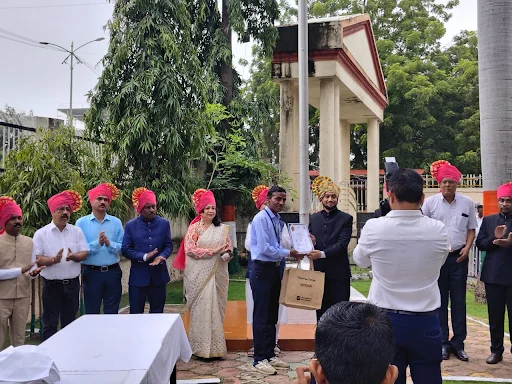
Vinoba also ensures that recognition happens in person.
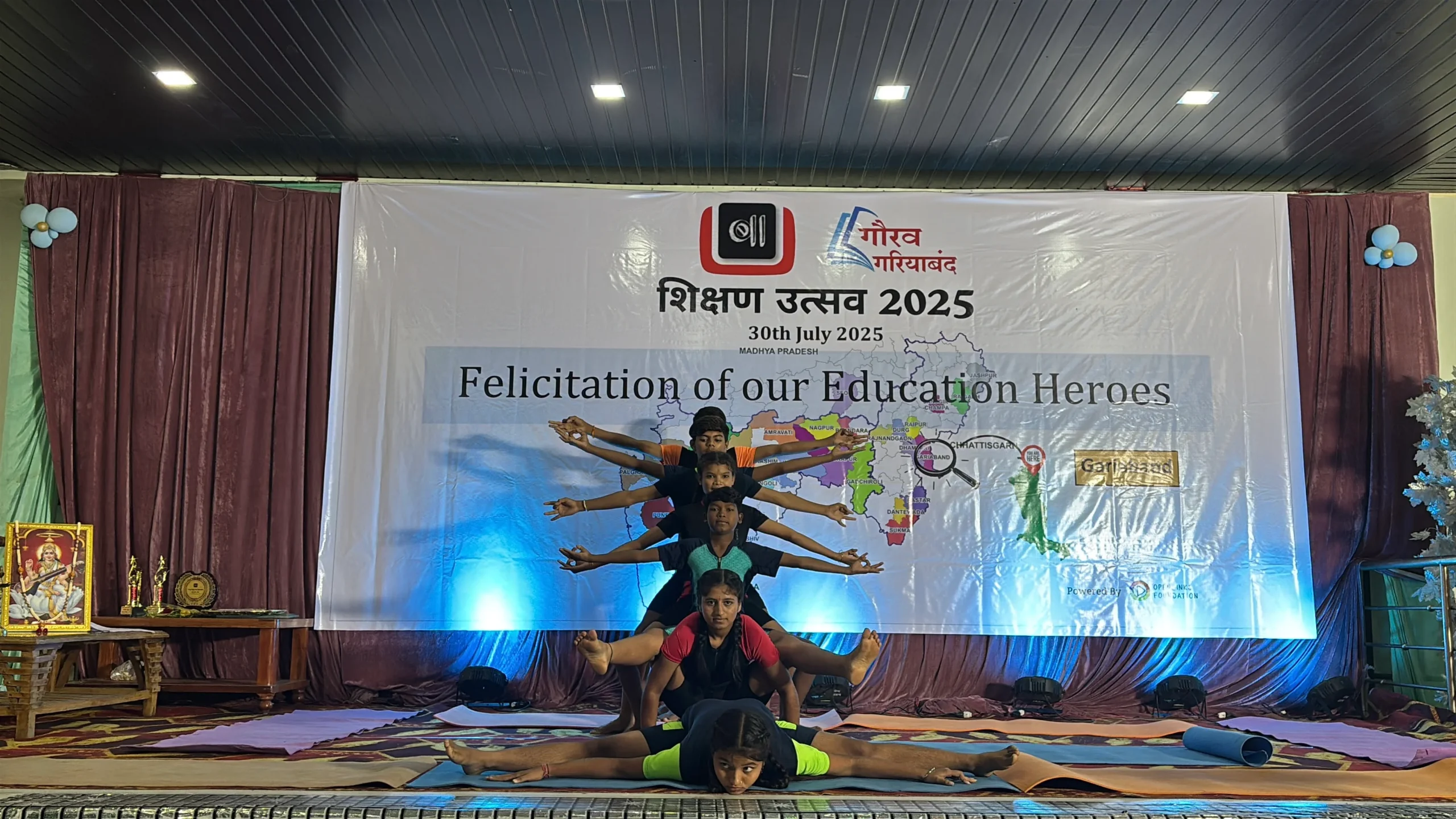
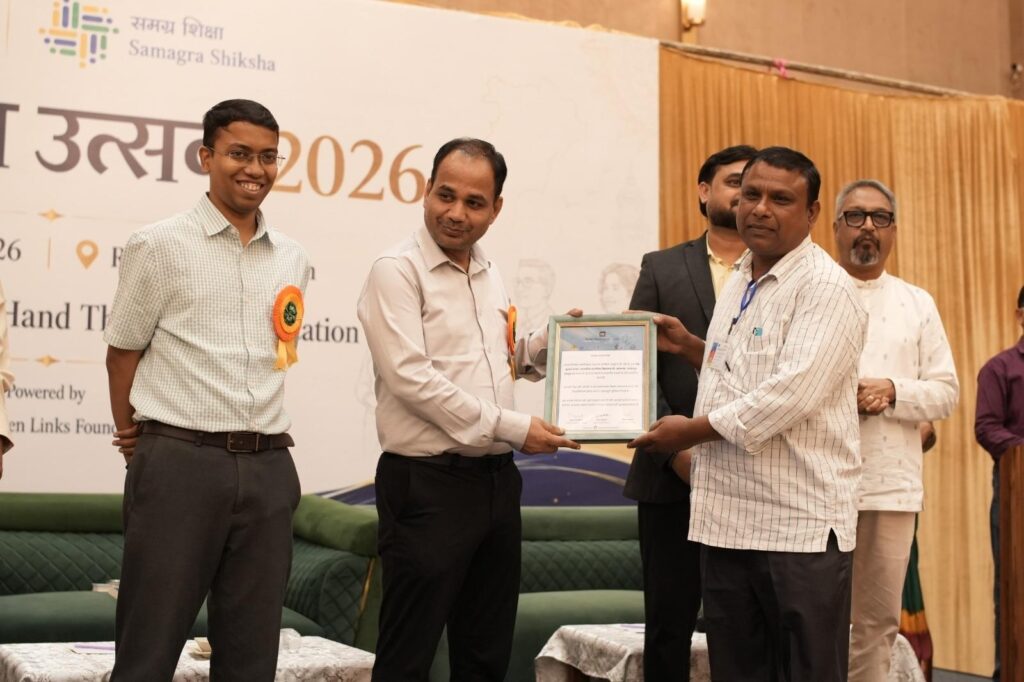
Events such as Coffee with CEO and Shikshan Utsav enable teachers to meet face-to-face with district administrators and their peers. And where someone needs something concrete to keep going, such as a laptop, the platform helps arrange it.
From Classroom Innovation to a Connected Education System
Before, none of this reached beyond one room. The system was often unaware of good teaching, let alone able to recognise it.
Vinoba provides a new direction.
The classroom, the staffroom, and the district office stop working as separate parts and start functioning as one whole system.
Curious how the officers guiding this work see it? Watch our Margdarshaks, the IAS officers who mentor the programme, share their thoughts on Vinoba.
Frequently Asked Questions
Why is teacher recognition important in government schools?
Teacher recognition matters because it gives teachers a reason to keep practices that work and helps those practices become visible beyond one classroom. Specific recognition can strengthen motivation, reinforce effective teaching methods, and help useful classroom ideas reach other teachers and schools.
How can teacher recognition improve teacher motivation?
Specific recognition can strengthen a teacher’s sense of competence, ownership, and connection with peers. When teachers see that their classroom efforts are noticed and valued, they are more likely to continue improving and experimenting with new teaching practices.
How can classroom innovation be shared across government schools?
Classroom innovation can spread when teachers have opportunities to document what they are doing, share their methods with peers, receive feedback from administrators, and learn from practices that have worked in other schools.
How does Vinoba support teacher recognition?
Vinoba provides a platform where teachers can share classroom activities and student work, connect with peers, and receive recognition and feedback from administrators. Initiatives such as Post of the Month, Coffee with CEO, and Shikshan Utsav help make effective teaching practices more visible across the education system.